
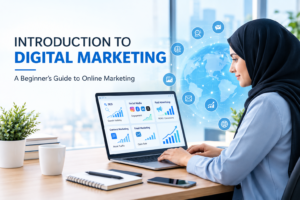
Introduction to Digital Marketing
Digital marketing has become an essential part of modern business growth. As more people use the internet to search for information, compare products, communicate with brands, and make purchasing decisions, businesses need a strong online presence to reach their target audience. Digital marketing includes a wide range of strategies and techniques that help businesses promote their products and services through digital channels such as search engines, social media platforms, websites, email, and online advertising.
One of the major benefits of digital marketing is its ability to connect businesses with the right audience at the right time. Traditional marketing methods often reach a broad audience, while digital marketing allows businesses to target specific groups based on factors such as location, interests, age, online behavior, and search intent. This targeted approach can help businesses create more relevant campaigns and communicate their messages more effectively.
Search engine optimization (SEO) is an important part of digital marketing. SEO helps websites improve their visibility on search engines and attract organic traffic. By using relevant keywords, creating useful content, improving website performance, and following search engine best practices, businesses can increase their chances of appearing in search results when potential customers are looking for related products or services. A strong SEO strategy can support long-term online visibility and brand awareness.
Another important component is social media marketing. Platforms such as Instagram, Facebook, LinkedIn, and other social networks provide businesses with opportunities to communicate directly with customers. Through engaging posts, videos, stories, graphics, and other content, brands can build relationships with their audiences and encourage interaction. Social media also provides valuable insights into customer preferences and behavior, which can help businesses improve their marketing strategies.
Content marketing is another powerful digital marketing strategy. High-quality content such as blog posts, articles, videos, infographics, product descriptions, and social media posts can provide useful information while helping businesses establish credibility. Well-planned content can answer customer questions, solve problems, increase website traffic, and support SEO efforts. When content is created around the needs and interests of a target audience, it can contribute to stronger customer engagement.
Paid advertising is also widely used in digital marketing. Search engine advertising, social media advertising, and pay-per-click campaigns allow businesses to promote their products or services to carefully selected audiences. Unlike some traditional advertising methods, digital advertising provides detailed performance data. Businesses can monitor impressions, clicks, conversions, cost per click, and other key performance indicators to understand how their campaigns are performing.
Another advantage of digital marketing is measurable results. Businesses can use tools such as Google Analytics and advertising platforms to track website visits, customer interactions, conversions, and campaign performance. This data-driven approach allows marketers to identify what is working and what needs improvement. Businesses can then adjust their campaigns, refine their audiences, and use their marketing budgets more effectively.
Digital marketing also offers flexibility for businesses of different sizes. A small local business can use local SEO, social media, and targeted advertising to reach customers in a specific area, while a larger company can use multiple digital channels to reach audiences across different regions or countries. Digital marketing strategies can therefore be customized according to business goals, audience needs, industry requirements, and available budgets.
Technology is continuously changing the digital marketing landscape. Artificial intelligence, marketing automation, data analytics, chatbots, and personalization tools are helping businesses create more efficient and relevant customer experiences. These technologies can help marketers analyze large amounts of data, automate repetitive tasks, personalize communication, and make faster decisions.
As competition continues to increase online, businesses need to remain adaptable and keep up with changing digital marketing trends. A successful online presence requires more than simply creating social media accounts or launching advertisements. Businesses need a well-planned strategy that combines SEO, social media marketing, content marketing, email marketing, paid advertising, and performance analysis.
By using the right digital marketing strategies, businesses can increase online visibility, reach their target audiences, build stronger customer relationships, and support sustainable growth. With continuous learning, quality content, data-driven decision-making, and effective use of modern technologies, digital marketing can become a valuable part of a business’s overall growth strategy.